RCS vs. WhatsApp Business Which One Wins for Indian SMEs in 2026?
RCS or WhatsApp Business API — which messaging channel is better for Indian SMEs in 2026? We compare cost, reach, features, DLT compliance, and give you a clear verdict.
If you run a
business in India and you are trying to figure out the best channel to
communicate with your customers at scale — you have probably run into both RCS
and WhatsApp Business at some point in 2026. Both promise high-engagement,
rich-media messaging. Both claim to be the future of business communication.
And if you are an SME owner trying to choose between them without a dedicated
technology team, the comparison can feel genuinely confusing.
So let us cut
through the noise. This guide compares RCS and WhatsApp Business API
head-to-head — specifically through the lens of what works for Indian SMEs in
2026. We cover what each platform actually is, what it costs, what features it
offers, how DLT registration affects each one, which industries benefit most
from each, and — most importantly — which one you should be building your
business communication strategy on right now.
The honest
answer is not the same for every business. A D2C fashion brand selling to
25-year-olds in Mumbai has a different answer from a B2B logistics company
servicing clients in Tier 2 cities. We will cover both — and every type of
Indian SME in between.
|
500M+ WhatsApp Users in India — World's
Largest Market |
800M+ RCS-Capable Devices in India by End of
2025 |
63M+ Indian SMEs — The Primary Audience for
This Guide |
|
98% WhatsApp Message Open Rate in India |
35% Higher RCS Engagement vs Plain SMS |
₹0 Cost to Receive Messages on Both
Platforms |
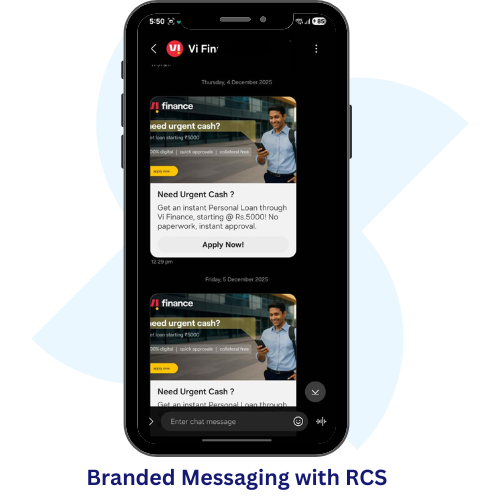
Rich Communication Services — SMS, But Supercharged
RCS stands for
Rich Communication Services. It is the next-generation messaging standard that
replaces traditional SMS — built directly into Android's default Messages app
and, since late 2024, supported by Apple on iPhones running iOS 18 and above.
Where SMS is plain text with a 160-character limit, RCS supports images,
videos, GIFs, carousels, suggested reply buttons, action buttons, branded
sender IDs, and read receipts — all delivered natively through the phone's
built-in messaging app, without requiring the recipient to download any
additional application.
In India, RCS
for business messaging — officially called RCS Business Messaging (RBM) — is
delivered through telecom operators and registered through the TRAI DLT
(Distributed Ledger Technology) system, the same regulatory infrastructure that
governs commercial SMS in India. Jio, Airtel, and Vi (Vodafone Idea) all
support RCS Business Messaging, meaning the majority of Indian smartphone users
on Android can receive RCS business messages without any additional action
required on their part.
What Changed in 2026 That Makes RCS Relevant Now
RCS has existed
as a standard for over a decade, but 2026 is the year it has become genuinely
relevant to Indian SMEs for three specific reasons. First, Apple's adoption of
RCS in iOS 18 resolved the long-standing gap between Android and iPhone users —
RCS messages can now reach virtually every smartphone user, not just Android
users. Second, Google's aggressive push of the Google Messages app as the
default Android messaging client, with RCS enabled by default, means the
majority of Android users in India are already RCS-ready. Third, TRAI's
continued strengthening of the DLT framework — which already governs commercial
SMS — has created a clear, well-understood regulatory pathway for RCS business
messaging that Indian businesses and their compliance teams can navigate within
existing processes.
|
🇮🇳 India
Context: India has one of the highest
concentrations of Android smartphones in the world — over 95% of Indian
smartphone users are on Android, where RCS via Google Messages is the
default. This makes India one of the most favourable markets globally for RCS
business messaging reach, even before accounting for the relatively recent
iOS 18 adoption. |
The World's Most-Used Business Messaging Platform
WhatsApp
Business API is the enterprise-grade version of WhatsApp — connecting the
world's most popular messaging app to business systems for automated, scalable,
personalised communication. In India, WhatsApp is not just widely used — it is
the dominant communication channel for a significant portion of the population,
cutting across age groups, income levels, and geographic areas in a way that no
other digital communication channel comes close to matching. With over 500
million users in India, WhatsApp is where the vast majority of your customers
already have active conversations every single day.
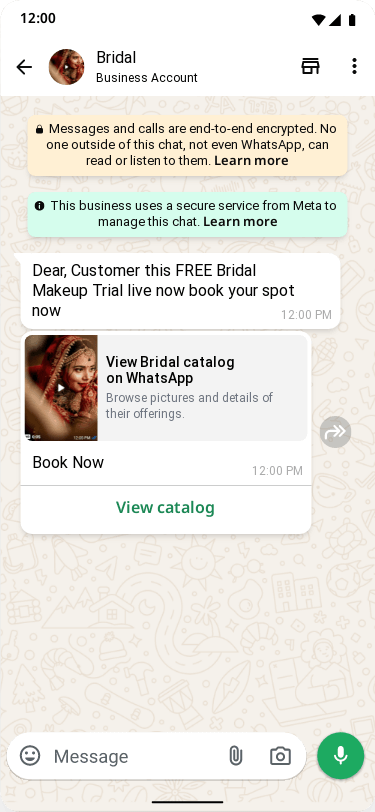
The WhatsApp
Business API allows Indian businesses to send broadcast messages to opted-in
contacts, build AI-powered chatbots for sales and support, manage multi-agent
team inboxes, share product catalogs, integrate with CRM and e-commerce
platforms, and access the full analytics visibility needed to measure and
optimise communication performance — all through a single API connection
managed via a WhatsApp Business Solution Provider (BSP).
WhatsApp Business in 2026 — What Has Changed
WhatsApp in
India in 2026 is a more powerful and more commercially mature platform than it
was even two years ago. WhatsApp Pay has expanded significantly — enabling
in-chat payments through UPI that allow customers to complete purchases without
leaving the conversation. Meta has deepened the Business API's capabilities
with more interactive message types, improved template management, and stronger
analytics. And the ecosystem of Indian BSPs — business solution providers like
Wati, Interakt, Gupshup, and others — has matured significantly, making
WhatsApp API deployment more accessible and more affordable for SMEs than ever
before.
|
🏪 SME Insight: WhatsApp is the channel your customers are already on
and already comfortable with. In India, asking a customer to switch to a
different communication channel for business interaction requires overcoming
a significant inertia barrier. WhatsApp has no such barrier — your customer
does not need to do anything new. They just reply to a message in an app they
already use for everything else. |
Let us go feature by feature. Each row shows how RCS and WhatsApp Business compare on the metrics that matter most to Indian SMEs — with a clear indicator of which platform has the advantage.
|
Feature |
🔵 RCS Business Messaging |
🟢 WhatsApp Business API |
|
User base
in India |
800M+
RCS-capable devices |
✅ 500M+
active daily users |
|
App
required |
✅ No —
built into Messages app |
Yes — WhatsApp
must be installed |
|
Opt-in
requirement |
✅ No
explicit opt-in (like SMS) |
Explicit
opt-in required for API |
|
Message
open rate |
45–65% (rich
SMS upgrade) |
✅ 98% —
world's highest |
|
Response
rate |
25–40% |
✅ 40–60% |
|
Rich media
support |
Images, video,
carousel, buttons |
Images, video,
docs, audio, stickers |
|
Interactive
messages |
Suggested
replies, action buttons |
Quick reply,
CTA buttons, list messages |
|
Product
catalog |
Not natively
supported |
✅ Full
catalog with in-chat sharing |
|
In-chat
payments (India) |
Limited —
carrier-dependent |
✅ WhatsApp
Pay via UPI — widely available |
|
Chatbot /
automation |
Yes — via RCS
Business API |
✅ Yes —
mature ecosystem, many BSPs |
|
Multi-agent
team inbox |
Via
third-party platforms |
✅ Native
via API + many BSP platforms |
|
CRM
integration |
Via API /
limited native options |
✅ Extensive
— HubSpot, Salesforce, Zoho etc. |
|
DLT
registration (India) |
✅ Required
— same TRAI DLT as SMS |
Not required —
Meta's own framework |
|
End-to-end
encryption |
Not encrypted
by default |
✅ Full E2E
encryption on all messages |
|
Cost per
message |
✅ ₹0.01–0.05
per message (like SMS) |
Per-conversation
pricing (₹0.35–0.70) |
|
Setup
complexity |
Moderate — via
telco/aggregator |
Moderate — via
BSP / Meta setup |
|
Brand
verification |
Sender ID +
verified brand badge |
Green tick
(Official Business Account) |
|
Analytics
and reporting |
Basic —
delivery and read rates |
✅ Full
campaign + conversation analytics |
|
Fallback if
unsupported |
✅ Auto-falls
back to SMS |
No fallback —
requires WhatsApp |
|
Ideal
volume |
High volume,
transactional |
✅ All
volumes — transactional + conversational |
What Is TRAI DLT and Why Does It Matter for Indian SMEs?
DLT —
Distributed Ledger Technology — is the TRAI-mandated regulatory framework that
governs all commercial messaging in India. Every business that sends commercial
SMS messages in India is required to register on the DLT platform — registering
their business entity, their sender IDs (the names or numbers that appear as
the message sender), and every message template before it can be sent. This
applies to promotional messages, transactional messages, and service messages
across all SMS-based commercial communication in India.
RCS Business
Messaging in India falls under the same TRAI DLT framework as commercial SMS.
This means Indian businesses that already have DLT registration for SMS can
extend that registration to RCS relatively straightforwardly — using the same
entity registration, the same compliance infrastructure, and a similar template
approval process. For businesses already operating within the DLT system,
adding RCS is an extension rather than a completely new compliance exercise.
WhatsApp and DLT — A Different Framework
WhatsApp
Business API operates under Meta's own regulatory framework — not under TRAI's
DLT system. WhatsApp's template approval process is managed entirely by Meta,
and businesses register and operate their WhatsApp Business accounts through
Meta Business Manager and approved BSPs without any interaction with the Indian
DLT system. This means WhatsApp is not subject to the same TRAI sender ID
restrictions, template category limitations, or DND (Do Not Disturb) list
compliance requirements that govern SMS and RCS in India.
For Indian
SMEs, this distinction has significant practical implications. A business that
has struggled with DLT template rejections, sender ID issues, or DND compliance
for SMS will find WhatsApp a more permissive and flexible regulatory
environment for commercial messaging. Conversely, a business with an
established, well-functioning DLT setup and existing compliance processes will
find RCS an easier extension of its current messaging infrastructure.
DLT Head-to-Head for Indian SMEs
|
DLT /
Compliance Factor |
🔵 RCS |
🟢 WhatsApp |
|
Registration
body |
TRAI DLT (same
as SMS) |
Meta Business
Manager |
|
Template
approval |
TRAI DLT
template registration |
Meta template
approval (1–3 days) |
|
DND
compliance |
Must respect
TRAI DND registry |
No TRAI DND
restriction applies |
|
Sender ID |
Registered
brand name via DLT |
WhatsApp
display name (Meta-approved) |
|
Consent
framework |
TRAI consent
management framework |
WhatsApp
opt-in (your own process) |
|
Regulatory
body if issue |
TRAI — Indian
regulator |
Meta — private
company policy |
|
SME
complexity |
Moderate —
familiar if you do SMS |
Moderate — new
framework to learn |
|
⚠️ Watch Out: Indian SMEs sending bulk commercial messages through
RCS must comply with TRAI's TCCCPR 2018 regulations — the same rules
governing SMS. This includes DND scrubbing, category-appropriate templates,
and consent documentation. Violations attract the same penalties as SMS
violations, including sender ID blacklisting. Always work with a
TRAI-compliant aggregator for RCS Business Messaging deployment in India. |
5. Cost Comparison — What Does Each Channel
Actually Cost Indian SMEs?
RCS Pricing in India
RCS Business
Messaging in India is typically priced on a per-message basis — similar to SMS
— ranging from approximately ₹0.01 to ₹0.05 per message depending on the
aggregator, the message type (basic RCS vs rich card vs carousel), and the
volume committed. This per-message pricing model is familiar to Indian
businesses that already use SMS for bulk communication — and for very
high-volume, one-way transactional messaging (OTP delivery, shipping
notifications, bank alerts), RCS can be the more cost-efficient option at
scale.
WhatsApp Business API Pricing in India
WhatsApp
Business API uses a conversation-based pricing model — you pay per 24-hour
conversation window, not per individual message. As of 2026, Meta charges per
conversation by category: marketing conversations are priced at approximately
₹0.58 to ₹0.70 per conversation, utility conversations (transactional — order
confirmations, shipping updates, appointment reminders) at approximately ₹0.12
to ₹0.15, and authentication conversations (OTP delivery) at approximately
₹0.10 to ₹0.13. Service conversations — where the customer initiates contact —
are free for the first 1,000 conversations per month and minimally priced
thereafter.
For Indian
SMEs, the conversation model means the economics depend heavily on your use
case mix. A business sending primarily utility messages (order updates,
appointment reminders) will find WhatsApp pricing very competitive with RCS. A
business running primarily marketing campaigns at high volume will find RCS
per-message pricing potentially lower at scale — though the higher engagement
and conversion rates of WhatsApp marketing messages often produce better
revenue-per-rupee-spent even at a higher nominal cost.
True Cost — Beyond the Per-Message Price
|
Cost
Component |
🔵 RCS |
🟢 WhatsApp |
|
Per message
/ conversation |
₹0.01–0.05 per
message |
₹0.10–0.70 per
conversation (by type) |
|
Platform /
BSP fee |
Aggregator
monthly fee |
BSP platform
monthly subscription |
|
Setup cost |
DLT
registration + aggregator setup |
Meta Business
Manager + BSP onboarding |
|
Template
creation cost |
DLT
registration fee per template |
Free (Meta
approval only) |
|
Chatbot /
automation |
Via aggregator
platform (extra cost) |
Many BSPs
include chatbot builder |
|
Analytics
platform |
Often basic —
extra cost for advanced |
Usually
included in BSP platform |
|
Volume
discount |
Yes —
negotiable at scale |
Meta volume
pricing at higher tiers |
|
Best for
cost |
Very
high-volume transactional (OTP) |
Conversational
+ marketing campaigns |
|
💡 Pro Tip: For Indian SMEs sending over 500,000 transactional
messages per month — OTP delivery, bank alerts, order confirmations — RCS
per-message pricing will likely be more economical than WhatsApp
conversation-based pricing. For SMEs sending under 100,000 messages per month
with a mix of transactional and conversational use cases, WhatsApp's richer
engagement typically delivers better commercial ROI despite potentially
higher nominal message costs. |
6. Which Platform Wins for Your Indian SME
Type?
The right channel depends on your business model, your customer base, and what you are trying to achieve with your messaging. Here is the honest verdict for each major Indian SME category.
|
🛍️ |
D2C
E-Commerce Brand (Fashion, Beauty, Home, Electronics) RCS: Good
for rich promotional messages, carousel product showcases, and OTP delivery.
No catalog or in-chat payment support reduces conversion capability. WhatsApp: Excellent — broadcast campaigns, product catalog sharing,
WhatsApp Pay for checkout, cart recovery automation, post-purchase sequences.
Full-funnel sales channel. Winner for
this business: WhatsApp
Business API — clear winner for D2C e-commerce |
|
🏦 |
NBFC
/ Fintech / Lending Business RCS: Strong
for regulated transactional communication — loan approval alerts, EMI
reminders, repayment notifications. DLT framework is familiar and compliant. WhatsApp: Good for conversational collection and customer service, but
encryption and Meta's private framework may raise compliance questions for
regulated financial entities. Winner for
this business: RCS
for transactional alerts + WhatsApp for customer service conversations |
|
🏥 |
Healthcare
Clinic / Diagnostic Centre / Pharmacy RCS: Good
for appointment reminders and health alerts at scale. No opt-in barrier means
broader reach for healthcare communication. WhatsApp: Excellent for appointment booking flows, pre-procedure
preparation, lab report delivery, and post-visit follow-up — patients are
already on WhatsApp. Winner for
this business: WhatsApp
Business API — better for patient relationship management |
|
🏫 |
EdTech
/ Coaching Institute / Online Learning RCS: Suitable
for class reminders, fee payment alerts, and exam notifications via
DLT-compliant templates. WhatsApp: Superior for student engagement — doubt-solving via chatbot,
course content delivery, attendance reminders, parent communication, and
admission enquiry qualification. Winner for
this business: WhatsApp
Business API — significantly better for education engagement |
|
🚚 |
Logistics
/ Courier / Delivery Business RCS: Excellent
for high-volume shipment tracking notifications, delivery alerts, and OTP
delivery. Per-message pricing works well at shipment notification scale. WhatsApp: Good for customer service conversations and delivery issue
resolution. Higher cost per notification at very high shipment volumes. Winner for
this business: RCS
for tracking notifications + WhatsApp for exception handling and support |
|
🏪 |
Retail
/ Kirana / Offline Store With Customer Database RCS: Good
for promotional offers and loyalty reminders. Opt-in not required is an
advantage for existing customer bases. WhatsApp: Better for two-way engagement — customers can reply to offers,
place orders via catalog, and get support. WhatsApp penetration in your
customer base is almost certainly higher. Winner for
this business: WhatsApp
Business API — better for retail relationship building |
|
🏗️ |
B2B
Services / Consulting / Agencies RCS: Limited
advantage in B2B — most B2B communication is email or WhatsApp based, not
SMS/RCS based. WhatsApp: Excellent — WhatsApp is widely used for B2B communication in
India, especially for client updates, proposal sharing, meeting scheduling,
and ongoing account management. Winner for
this business: WhatsApp
Business API — B2B in India runs on WhatsApp |
|
🏨 |
Hospitality
/ Hotel / Restaurant / Travel Agent RCS: Useful
for booking confirmations and travel alerts via DLT-compliant templates. WhatsApp: Excellent — booking flows, menu sharing, table booking
management, travel itinerary delivery, pre-arrival messages, and review
collection all work natively in WhatsApp. Winner for
this business: WhatsApp
Business API — hospitality customer experience runs on WhatsApp |
End-to-End Encryption — WhatsApp's Significant Advantage
WhatsApp uses
end-to-end encryption (E2EE) for all messages — meaning messages are encrypted
on the sender's device and can only be decrypted on the recipient's device. Not
Meta, not the BSP, not the network carrier can read the content of a WhatsApp
message in transit. For Indian businesses communicating sensitive information —
health data, financial details, legal documents, personal identification
information — this encryption provides a meaningful security guarantee.
RCS messages
are not end-to-end encrypted by default in 2026. While Google has implemented
encryption for one-to-one RCS conversations between personal users, RCS
Business Messaging — the version Indian businesses use to communicate with
customers — does not have end-to-end encryption. Messages travel through
carrier infrastructure and aggregator platforms where they may be accessible to
multiple parties in the delivery chain. For most transactional messaging use
cases — OTP delivery, shipping updates, appointment reminders — this is
unlikely to be a significant concern. For healthcare, financial services, and
any communication involving sensitive personal data, the absence of E2EE in RCS
should be a deliberate consideration in your channel selection.
Data Residency and DPDP Compliance
India's Digital Personal Data Protection Act (DPDP) 2023 introduces data localisation and processing requirements that are still being operationalised in 2026. Both RCS through Indian telecom operators and WhatsApp through Meta's global infrastructure present different data residency profiles. RCS through Indian telecom operators keeps data within Indian carrier infrastructure — potentially advantageous for DPDP compliance. WhatsApp processes data through Meta's global infrastructure — requiring attention to cross-border data transfer provisions under DPDP. As the DPDP framework's implementation rules are finalised, Indian SMEs in regulated sectors should work with their legal counsel to assess the implications for their chosen messaging channel.
When One Channel Is Not Enough
The most
commercially sophisticated Indian businesses in 2026 are not choosing between
RCS and WhatsApp — they are using both, in a complementary architecture where
each channel handles the use cases it is best suited for. This hybrid approach
delivers the best of both platforms: the broad reach and cost efficiency of RCS
for high-volume transactional notifications, combined with the conversational
depth, higher engagement, and richer feature set of WhatsApp for customer
relationship management and sales conversion.
A Practical Hybrid Architecture for Indian SMEs
•
OTP and authentication —
RCS (or SMS fallback) for cost-efficient, high-volume authentication delivery
•
Shipping and delivery
notifications — RCS for scale and cost efficiency at high shipment volumes
•
Promotional campaigns —
WhatsApp for higher engagement, personalisation, and two-way response
•
Customer support — WhatsApp
for conversational resolution and multi-agent inbox capability
•
Sales and lead nurturing —
WhatsApp for chatbot qualification, catalog sharing, and conversion
•
Loyalty and re-engagement —
WhatsApp for personalised, high-engagement relationship building
•
Payment reminders — RCS for
straightforward bulk reminders; WhatsApp for contested or high-value
collections
The operational
complexity of managing two channels is real — but it is manageable with the
right platform infrastructure. Several Indian messaging platforms and BSPs now
support both RCS and WhatsApp from a single dashboard, allowing businesses to
manage channel selection, contact routing, and cross-channel analytics without
maintaining two entirely separate technology stacks.
|
⚖️ Verdict: For most Indian SMEs with fewer than 100,000 messages
per month across all use cases, WhatsApp Business API alone will deliver
better commercial outcomes than RCS alone or than a complex hybrid strategy.
The platform's conversational capability, payment integration, catalog
features, and engagement metrics make it the more versatile single-channel
investment. For SMEs sending over 500,000 transactional messages per month —
particularly in fintech, logistics, and banking — the hybrid model's cost efficiency
at notification scale makes the additional operational complexity worthwhile. |
9. The Honest 2026 Verdict for Indian SMEs
WhatsApp Business API Wins — For Now, For Most
In 2026, for
the majority of Indian SMEs, WhatsApp Business API is the stronger commercial
investment. The reasons are not primarily about features — both platforms have
strong feature sets. They are about where your customers actually are, how they
actually communicate, and what the platform's maturity means for your ability
to deploy effectively and see results quickly.
Five hundred
million Indians are active WhatsApp users. They check it dozens of times a day.
They have conversations with family, friends, and businesses they trust on it.
When your business message arrives on WhatsApp, it arrives in the most trusted,
most attended digital space in their daily life. That context produces the 98%
open rates and the 40 to 60% response rates that make WhatsApp India's
highest-performing commercial messaging channel. No other platform can match
that combination of reach, trust, and engagement today.
Where RCS Has the Edge — Be Honest About It
RCS is
genuinely better than WhatsApp for four specific scenarios: very high-volume
transactional messaging where per-message pricing delivers significant cost
savings at scale, businesses that are deeply embedded in the TRAI DLT framework
and want to extend existing compliance infrastructure, use cases where the
recipient does not have WhatsApp installed (a diminishing but real concern in
some demographics and geographies), and businesses where the automatic SMS
fallback capability of RCS provides an important delivery guarantee for
critical alerts.
The Future: RCS Will Get Stronger
RCS is a
platform in growth. Apple's adoption in iOS 18 resolved the biggest structural
gap in its reach. Google's continued investment in the Google Messages platform
as the default Android experience will drive ongoing adoption. And as the RCS
ecosystem matures — with richer business features, better analytics, and more
accessible BSP infrastructure — its case for Indian SMEs will strengthen. The
businesses that dismiss RCS entirely in 2026 may find themselves revisiting
that decision in 2027 or 2028 as the platform closes the gap on WhatsApp's
current advantages.
The right strategic posture for Indian SMEs is to build on WhatsApp Business API now — it is the mature, high-engagement platform that will deliver the best commercial outcomes for most businesses today — while staying informed about RCS development and being prepared to add it as a complementary channel when the economics and ecosystem justify it for your specific business model.
Frequently Asked Questions
Q: Is RCS available on
all phones in India?
A: RCS Business Messaging is available on Android phones
running Google Messages as the default SMS app — which covers the vast majority
of Indian Android smartphones. Since iOS 18, iPhones also support RCS, though
the Apple adoption rate in India is significantly lower than Android. The
practical reach for RCS in India in 2026 is extremely broad on Android but
limited on iOS, compared to WhatsApp which is available across both platforms
wherever the app is installed and active.
Q: Do I need DLT
registration to use WhatsApp Business API in India?
A: No. WhatsApp Business API does not fall under TRAI's
DLT framework. WhatsApp uses Meta's own business verification and template
approval process, which is entirely separate from India's DLT system. You
register through Meta Business Manager and a WhatsApp Business Solution
Provider (BSP), not through telecom carriers or the DLT platform. This is one
of WhatsApp's regulatory advantages for Indian businesses that have found the
DLT process cumbersome.
Q: Which is cheaper — RCS
or WhatsApp Business API for Indian SMEs?
A: For high-volume transactional messaging (OTP,
notifications, alerts at over 500,000 messages per month), RCS per-message
pricing (₹0.01 to ₹0.05) is typically cheaper than WhatsApp conversation
pricing. For mixed-use cases combining transactional and conversational
messaging, WhatsApp's per-conversation model is often comparable or better
value when you factor in the higher engagement and conversion rates that
WhatsApp delivers — meaning you generate more revenue per rupee spent on
messaging even if the nominal cost per message is higher.
Q: Can I use both RCS and
WhatsApp Business API together?
A: Yes. A hybrid strategy using RCS for high-volume
transactional notifications and WhatsApp for conversational sales and support
is used by larger Indian enterprises. Several messaging platforms support both
channels from a single dashboard. For most Indian SMEs, however, starting with
WhatsApp Business API alone and potentially adding RCS later for specific use
cases is the simpler and more commercially effective approach.
Q: Is WhatsApp Business
API safe for sensitive customer data in India?
A: WhatsApp provides end-to-end encryption for all
messages — meaning message content cannot be accessed by Meta, BSPs, or
carriers in transit. For businesses communicating sensitive health, financial,
or personal data, this encryption provides meaningful security protection. RCS
Business Messaging does not have end-to-end encryption by default in 2026.
Under India's DPDP Act 2023, both platforms will need to be assessed for data
residency and processing compliance as the Act's implementation rules are finalised
— consult your legal counsel for sector-specific guidance.
Q: Is RCS better than
WhatsApp for B2B communication in India?
A: No. WhatsApp is the dominant B2B communication channel
in India — used routinely for vendor relationships, client updates, proposal
sharing, and business coordination across virtually every industry. RCS has
very limited B2B adoption in India in 2026. For any business-to-business
communication, WhatsApp is the right channel — it is where your Indian business
contacts already are and where they expect to receive business communication.
Q: Will RCS replace
WhatsApp in India?
A: Not in the near term. WhatsApp has a 500 million+ user base in India with deeply embedded usage habits, a rich feature set including WhatsApp Pay, and a rapidly maturing business API ecosystem. RCS is growing in reach and capability but starts from a much lower base of actual business messaging usage in India. The more likely outcome in the next two to three years is that RCS and WhatsApp coexist as complementary channels — RCS handling high-volume transactional messaging alongside SMS, and WhatsApp handling conversational customer engagement and sales.
Conclusion — Choose Your Channel, Then
Commit
The RCS vs
WhatsApp debate for Indian SMEs in 2026 has a clear answer for most businesses:
start with WhatsApp Business API, build your conversational infrastructure, and
capture the commercial returns from India's most engaged messaging channel
before adding additional complexity.
RCS is a
genuine contender — particularly for high-volume transactional use cases, for
businesses already embedded in the DLT framework, and for organisations that
need the SMS fallback guarantee. It will grow in relevance as Apple adoption
increases, as the Indian RCS ecosystem matures, and as pricing and platform
capability continue to improve. Dismissing it entirely is not the right
approach.
But for most Indian SMEs reading this guide in 2026 — the D2C brand trying to recover abandoned carts, the EdTech company trying to improve student engagement, the healthcare clinic trying to reduce appointment no-shows, the B2B agency trying to stay close to its clients — WhatsApp Business API is the platform that delivers the reach, the engagement, the features, and the commercial outcomes you need. Build there first. Build well. And stay curious about what RCS becomes in the years ahead.